Hurricane Season Prep: Why South Georgia Homeowners Are Investing in Portable Storage Buildings Now
Hurricane season runs from June through the end of November, and here in Waycross, we know better than most that late summer and early fall are when South Georgia sees the most action. Whether it’s a tropical storm rolling up from the Gulf or a hurricane tracking through the Southeast after making landfall in Florida, the remnants of these storms bring heavy rain, high winds, and the kind of flooding that can turn a garage or an open carport into a liability instead of a shelter. You can track active systems yourself throughout the season at the National Hurricane Center.
If you’ve ever scrambled to move a generator, a riding mower, or a stack of lawn equipment out of the rain the night before a storm hits, you already understand the problem. A portable storage building solves it before the forecast even turns ugly.
Why Waycross Sits in the Storm’s Path
Waycross may be about 60 miles inland, but “inland” doesn’t mean “out of reach.” Tropical systems that come ashore along the Georgia and Florida coastline routinely push heavy rain bands and tropical-storm-force winds well into Ware County and the rest of South Georgia — our local National Weather Service forecast office covers southeast Georgia along with northeast Florida for exactly this reason. The Okefenokee Swamp region already deals with poor drainage and low-lying land, so when a storm dumps several inches of rain in a short window, standing water on your property is often the result, not the exception.
We work with property owners throughout Waycross and the surrounding communities we service, and the drainage challenges are similar across most of Ware County and the neighboring counties we cover.
That combination of wind and water is exactly what damages the things people store outdoors or in flimsy structures: ATVs, tools, feed and seed, boats, generators, and seasonal equipment. A well-built, properly anchored portable building keeps those items dry, secure, and off the ground.
What Makes a Building “Storm-Ready”
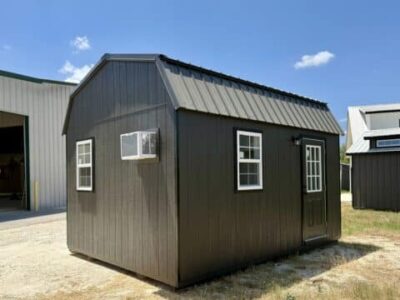
Not every shed on a lot is built to handle a South Georgia storm season. When you’re comparing portable buildings or heavier-duty metal buildings, look for a few things that separate a storm-ready building from a basic backyard shed:
Anchoring. A portable building is only as good as what’s holding it to the ground. Ask about ground anchors or auger anchoring rated for high-wind areas, especially if the building will sit in an open area with nothing to break the wind.
Roof and wall construction. Metal roofing with a proper overhang, tightly screwed panels, and reinforced trusses handle wind uplift far better than budget-grade materials. If a building’s specs don’t mention wind rating, ask.
Elevation. In low-lying yards, even a few inches of clearance between the floor and the ground can be the difference between a dry building and a flooded one. A treated wood or steel frame base built up off grade helps keep moisture and standing water away from whatever you’re storing.
Ventilation. Humidity is a year-round problem in South Georgia, and a sealed-up building with no airflow will trap moisture, leading to rust, mildew, and warped wood. Good vents or a ridge vent keep air moving even when the doors stay shut for weeks at a time.
The Case for Buying Before the Storm, Not After
Every year, the same pattern plays out: a storm is forecast, demand for storage spikes, and by the time people start calling around, lead times stretch out and inventory gets thin. Buying ahead of the season — ideally in spring or early summer — means you get the building you actually want, sized and placed the way you need it, instead of taking whatever is left on the lot two days before a storm makes landfall.
There’s also a financial angle worth considering. Storm damage to uncovered equipment, tools, or vehicles is rarely a small expense, and homeowners insurance doesn’t always cover items stored outside a permanent structure. A one-time investment in a quality portable building is often far cheaper than replacing a generator, mower, or set of tools that sat outside during a bad storm — and we offer financing options if you’d rather spread the cost out ahead of the season instead of paying for storm damage all at once after the fact.
Common Uses We See Around Waycross Before Storm Season
Talk to enough customers in Ware County and a pattern emerges in what people are protecting:
Generators and fuel storage top the list every year, since a generator left exposed to wind-driven rain is both a safety hazard and a maintenance headache. Lawn and farm equipment — mowers, tillers, ATVs, and UTVs — is a close second, especially for the rural properties common throughout South Georgia, and many customers pair a metal garage or carport with a smaller building for exactly this. We also see a steady need for hay and feed storage that keeps supplies dry through a wet week, along with general overflow storage for homeowners who want tools, seasonal decorations, and outdoor furniture out of the yard before wind picks up. You can see examples of these setups in our building gallery.
Sizing a Building for What You Actually Need to Protect
One of the most common mistakes is undersizing. It’s worth taking stock of everything you’d want under cover during a storm — not just today’s equipment, but anything you’re likely to add over the next few years — before settling on a size. A building that’s a little larger than you think you need now usually pays off later, since portable buildings are far easier to order right the first time than to replace in a year or two.
If you’re storing a vehicle, ATV, or larger equipment, pay attention to door width and height, not just square footage. A building that’s technically big enough on the inside but has a door too narrow for your equipment doesn’t solve the problem it was bought to solve.
Placement Matters as Much as the Building Itself
Where you put a portable building affects how well it holds up. A few things worth thinking through before delivery:
Avoid low spots in the yard where water naturally collects during heavy rain — even a well-built structure will struggle if it’s sitting in a puddle for days after a storm. Pay attention to tree cover, since a building placed under large limbs is at risk from falling branches in high wind, even if the building itself is well anchored. Leave room around the structure for drainage and airflow, and confirm placement is a reasonable distance from property lines if that matters for your county or homeowners’ association rules.
A reputable portable building company will walk your site with you and make recommendations based on drainage, wind exposure, and how you plan to use the building — not just drop it wherever is most convenient to deliver. Our team does exactly that for every delivery in our service area, and if you’re unsure about county setback rules for your property, the Georgia Emergency Management and Homeland Security Agency is a good starting point for storm-preparedness guidance specific to Georgia.
Getting Ready Before the Next Storm Watch
Hurricane season in South Georgia isn’t a one-time event to prepare for — it’s a stretch of months where the risk is real and recurring. The homeowners and small property owners who come through it with the least damage are usually the ones who made a plan before the first storm watch was ever issued, not after.
If you’re in or around Waycross and want to talk through sizing, anchoring, or placement for your property, Two Way Portable Buildings can help you find the right fit before the next system starts spinning up in the Gulf or the Atlantic. Browse our full lineup of portable buildings and metal buildings, or contact us directly to get a quote. Getting set up now means one less thing to worry about the next time a storm shows up in the forecast.